


-
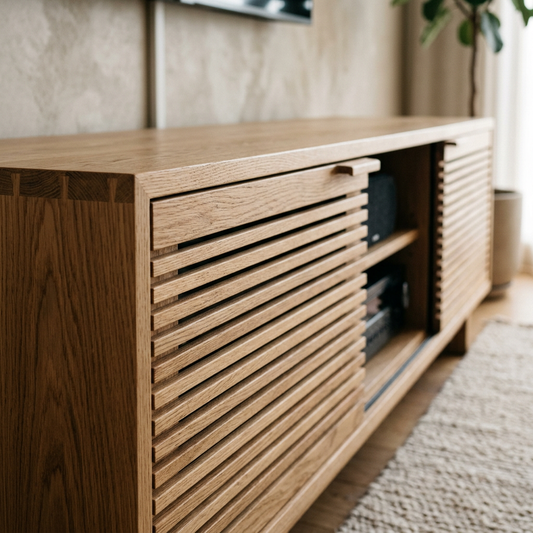
LUMEN Solid Oak Minimalist Media Console & TV Stand
Regular price Dhs. 1,599.01 AEDRegular priceDhs. 1,999.00 AEDSale price Dhs. 1,599.01 AEDSale

Frequently Asked Questions and Answers (FAQ)
1. What is a TV console? +
A TV console is a piece of furniture designed to support a television and help organize an entertainment area. Depending on the design, it may include shelves, drawers, or enclosed storage for media devices and accessories.
2. How do I choose the right TV console size? +
Measure your available space and check the dimensions of your television before choosing a TV console. Compare the console's width, height, and depth with your room layout, and confirm that its specifications suit your television setup.
3. Should a TV console be wider than the TV? +
A console that is wider than the television can create a balanced appearance, but the best proportions depend on your room and design preferences. Check the television's width, the console's dimensions, and any manufacturer requirements for safe placement.
4. What should I store in a TV console? +
Depending on its storage layout, a TV console can hold media players, gaming accessories, remote controls, cables, and other entertainment essentials. Review the product's shelves, compartments, dimensions, and ventilation requirements before storing electronic devices.
5. What is the difference between a TV console and an entertainment center? +
A TV console is generally a lower furniture unit designed to support a television and provide storage. An entertainment center may be a larger arrangement with additional shelving or surrounding storage. Exact designs and terminology vary by product and retailer.
6. How do I choose a TV console for a small living room? +
For a small living room, measure the available space carefully and compare compact TV consoles with dimensions that suit your layout. Consider the depth of the unit, the storage you need, and the space required to move comfortably around the furniture.
7. What should I consider before buying a TV console? +
Consider the console's dimensions, storage configuration, materials, finish, weight capacity, and compatibility with your television setup. Check the product listing for assembly requirements, cable management features, and any mounting or safety guidance where applicable.


